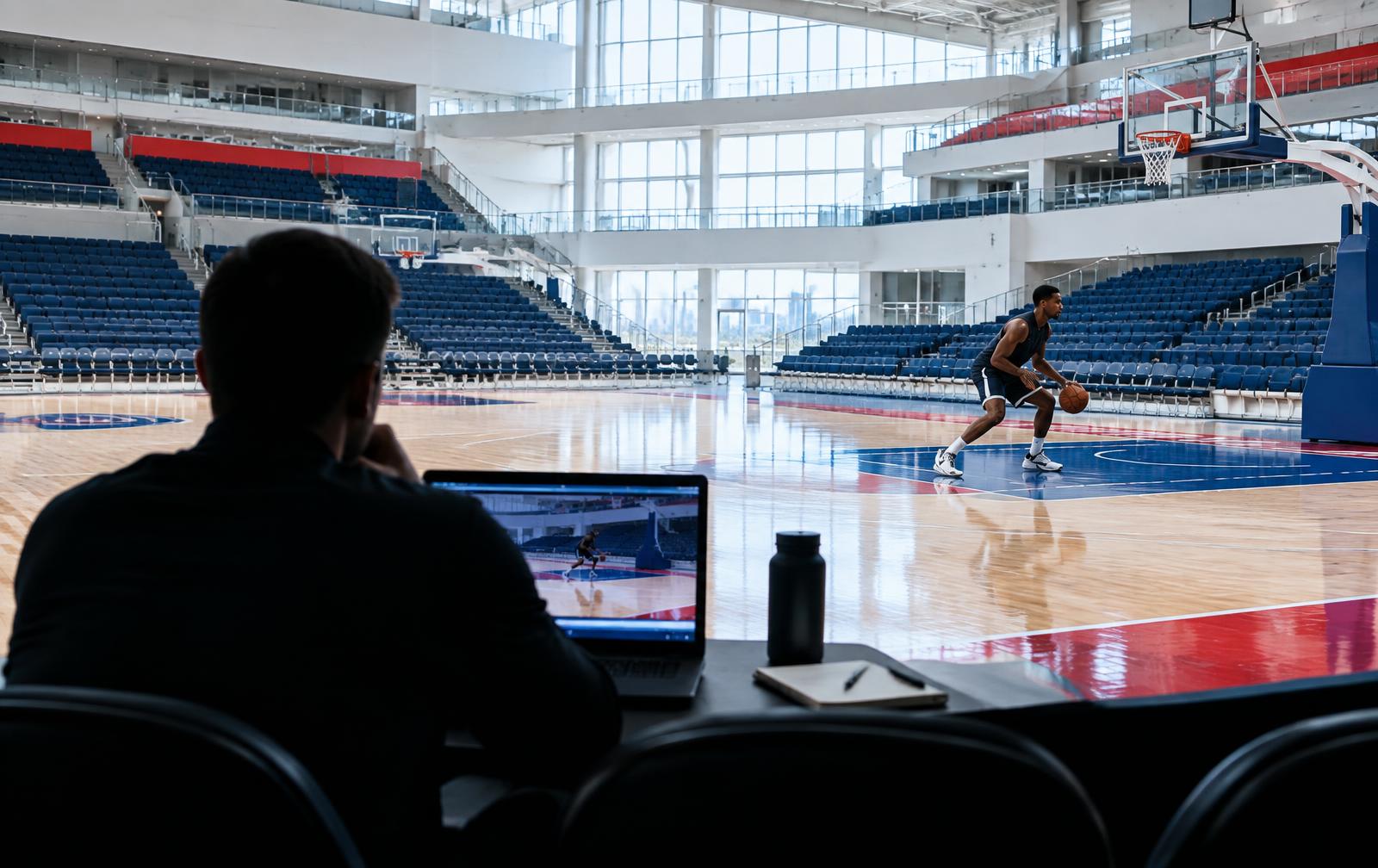
Scouting fundamentals 3 min read
How to build a basketball scouting report.
A useful scouting report is a decision document, not a collection of adjectives. It explains what a player does today, which skills may translate to a different setting, and what evidence supports that projection. This guide offers a repeatable framework for clubs and college programs evaluating a prospect.
Scouting Lab editorial / About the service
01 / Field notes
Start with the player's context
Record the player's age, position, team, competition, season and current role before interpreting a performance. A guard taking difficult shots late in the clock is working in a different environment from a spot-up shooter receiving open looks. The same scoring average can describe very different players.
Document how the evidence was collected: full games or clips, live observation or video, and the number of games reviewed. Note missing measurements rather than estimating them. Height, wingspan and physical development should only be treated as verified when a reliable source exists.
- Identify team, season, age group and competition.
- Describe usage, minutes and responsibility within the lineup.
- Keep verified measurements separate from reported measurements.
- State the sample and any important gaps in coverage.
02 / Field notes
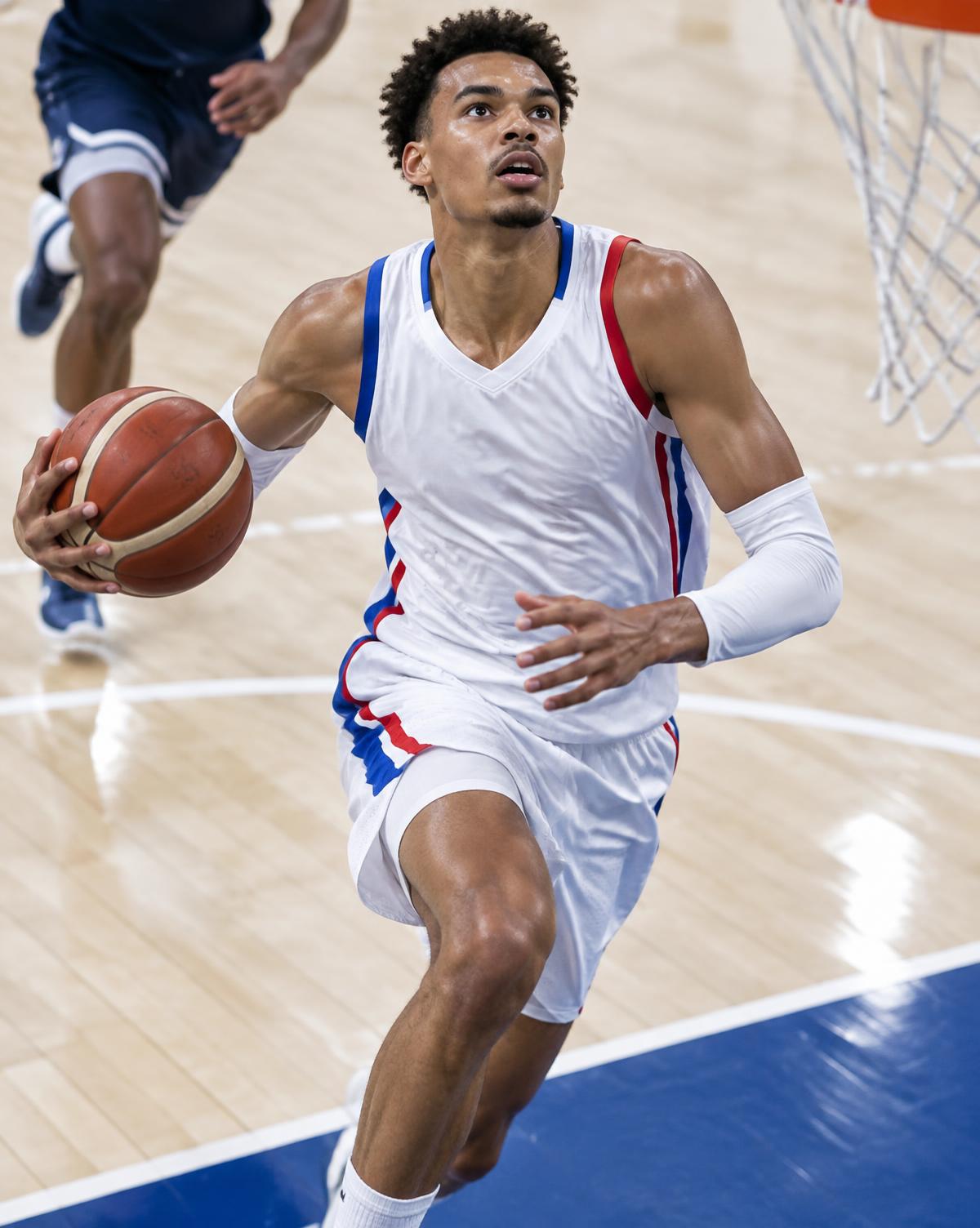
Evaluate offense beyond the box score
Break offense into decisions and repeatable skills. For a ball handler, examine how an advantage begins: first step, changes of pace, screen use or strength. Then follow what happens next. Does the player recognize help, find the weak side, or keep the ball too long? A made shot does not automatically mean a good decision.
For shooting, distinguish catch-and-shoot attempts from pull-ups and heavily contested attempts. Consider footwork, preparation, release consistency and how defenders respond. For finishing, look at both hands, contact balance and touch against length. Off-ball value matters too: spacing, cutting, screening and the willingness to keep the offense moving.
03 / Field notes
Watch the defensive possessions that highlights omit
Start with the player's assignment. A difficult matchup can explain a poor-looking possession, while a low-risk assignment can conceal weaknesses. Evaluate stance, recovery after being beaten, screen navigation, closeout control and the ability to contain without fouling.
Away from the ball, watch early positioning, help timing, communication and the next rotation. Rebounding is not just a total: identify whether the player finds a body, tracks the ball and finishes the possession. Record positive actions and breakdowns, including possessions where the player is not directly involved in the shot.
04 / Field notes
Project a role, then name the risks
A role projection should explain the job a player could perform in a specific basketball environment. Rather than writing 'NCAA ready' or 'pro potential' without explanation, describe the tasks: secondary creation, defending wings, stretching a frontcourt or protecting the rim.
Separate the current floor from the developmental upside. Name the skills that already support the role and those that still need to emerge. Physical maturation, decision-making against stronger opponents and shooting consistency are uncertainties, not guaranteed improvements. A projection should be revised when the evidence changes.
05 / Field notes
Turn the evaluation into a concise decision
Lead with a short summary: current role, most transferable skill, biggest limitation and likely next step. Follow with offensive and defensive notes, a physical profile, supporting film timestamps and development priorities. Put the most decision-relevant evidence first.
Use a small number of concrete priorities. 'Improve shooting' is less actionable than 'stabilize footwork on relocation catch-and-shoot attempts.' Keep previous reports so a reader can see whether a priority is progressing across seasons. Scouting Lab's player dossiers and video library can be used together to connect the written evaluation with the film.
- One clear role projection, with its assumptions.
- Specific offensive and defensive evidence.
- Film references including game and timestamp.
- Development priorities and an explicit review point.
Common questions
Is a highlight reel enough for a scouting report?
No. It can identify a skill worth investigating, but it usually omits failed decisions, off-ball defense and the ordinary possessions needed to understand a player's role.
Should every prospect receive a numerical grade?
A grade can support comparison if the scale is defined, but it should not replace written evidence. Avoid treating two equal scores as identical profiles when role, age and competition differ.
Sources & further reading
Official resources and external reading are listed below. Scouting observations are editorial guidance, not eligibility, legal or medical advice.
- Pro Insight · ANGT evaluation example
An external example of event-based prospect notes. It is not a Scouting Lab evaluation or endorsement.